
Interview with Manifest
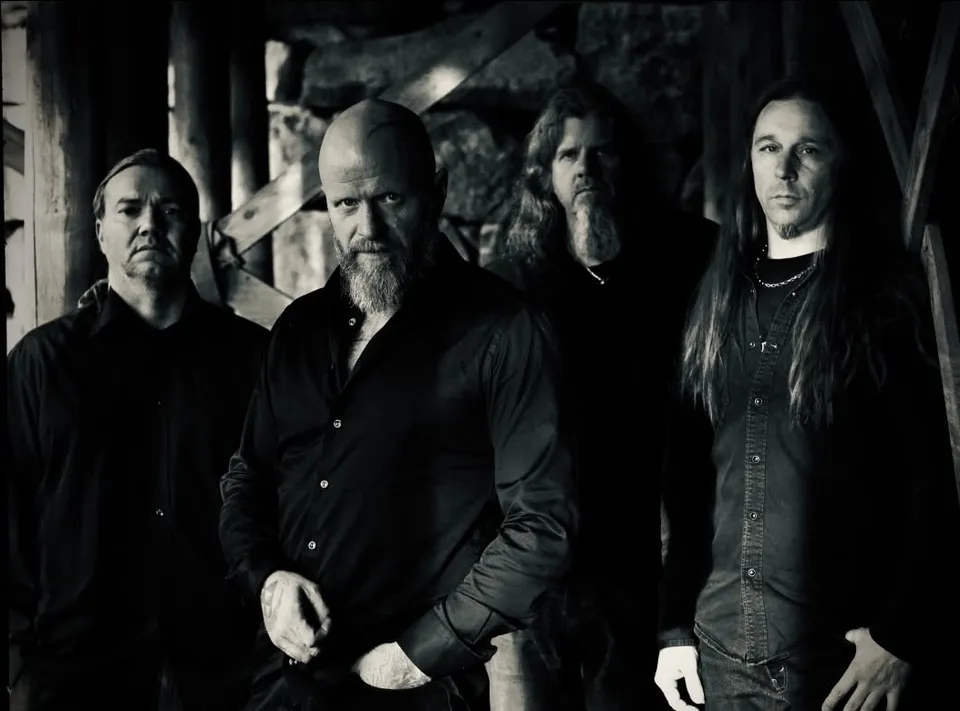
While listening to new and new releases, I happened to stumble upon Manifest quite by chance. The process is almost always the same: if a band manages to hold my attention long enough for me to listen to at least one song, then the whole album is next. And after that, you know how it goes... Nothing Left to Kill had just come fresh out of the oven and had an intriguing title, which made me want to read the lyrics, since musically I had already been hooked. Usually, many of us skip the lyrical part, as if it were merely there to decorate the songs. The impression I had formed of Manifest was reason enough to dig deeper, so I read a few interviews and eventually contacted them. They responded immediately, and the interview was arranged. The result is in front of you. Since they are not interested in musical labeling, I think it is enough to say that, at its core, this is metal, but with many, many other influences running through it, and that is precisely why I warmly recommend them. I particularly appreciate the dramatic quality of the vocals, especially where something needs to be emphasized, ironized, highlighted, etc., etc.
1. Hi guys! Please introduce yourselves.
Hi, my name is Stian Leknes, singer in Manifest since 2001.
2. You've been around since 1999, released your first demo in 2000, but your first full-length album didn’t come out until 2005. What was happening during those six years?
Times were different in the start of the 2000’s. You couldn’t just record an album and get it mixed in your bedroom. We had a cooperation with the studio Godt Selskap, which led to the first album. The process was long an winding, with some technical difficulties and the fact that most of us were young and temporarily insane didn’t help much for the time table either.
3. In an interview I read recently, you said that over the years you have become less obsessed with details and more focused on the bigger picture. What do you mean by “the bigger picture” when it comes to Manifest’s music?
We try to focus mainly on creating songs that are solid, not focusing so much on getting every little detail perfect, good songs are often born through imperfections. On this album we have picked out songs that fit together from a pool of around 14 songs we had made. The idea is to make songs that take us back to the metal we started listening to when we were teens, I think you can hear that in many of them. While a couple if them represent why we continue to find pleasure in the genre.
4. Looking through your discography, I noticed an interesting detail. Almost every release has been put out by a different label. What is the reason for that?
Labels are often like boxer shorts, they need to be changed, if not they get stinky.
5. I find the transformation from Half Past Violence to Nothing Left to Kill particularly interesting. From what I could hear, every album seems to represent a natural evolution from the previous one, although I have to say that the new album sounds the best to me. How would you explain that evolution from your perspective?
We have always tried to keep evolving, I think if you stop doing that you might as well stop playing music. The members in the band all bring their different inspirations to the table and we make compromises between us and try to find something that everyone in the band can get onboard with. Shortly put we just try to make the music we like the most. On this album the common denominator was intensity, we tried to focus on that word and bring as much of it as we could into every song.
6. Nothing Left to Kill is a title that sounds like a final point — as if the last resource for violence has already been exhausted, or perhaps we have destroyed everything and there is literally nothing left to destroy. For you, is the title more of an irony, an apocalyptic vision, or a comment on the reality we live in?
For me it’s a comment on the reality we will be living in if we continue to worship and elect leaders that are, megalomaniacs, racists, war mongers and more often than not have the intellect and emotional maturity of toddler with behavioural issues. Trump, Netanyahu, Erdoğan etc. being examples of the tragic humans we allow to destroy us. If we continue down this path, I fear that soon there will be nothing left to kill.
7. The album features songs such as “Praying for Armageddon,” “Agent of Chaos,” “World Is for Sale,” and “Scum.” How consciously do you use extreme imagery to talk about real social conditions?
As mentioned, I think we are living in a world that is increasingly being led by extremists, so extreme imagery seems appropriate. That being said, the world if humans have always been quite extreme, so in a way I guess we have always been skipping our way down the path to destruction of our kind. The planet will survive us for sure, we’ll just give it a good and thorough raping before we bow out. That’s just my opinion of course.
8. “World Is for Sale” in particular sounds like a title that can also be read politically. What exactly is “for sale” today, in your opinion — resources, nature, political influence, human dignity, or something else?
I think everything is for sale in the ultra capitalist world. We sell ourselves as individuals continuously on social media, we sell human and animal suffering in mass media, we indiscriminately take everything we can manage of natural recourses and sell it to the highest bidder all the time. So I think that according to humans, everything in the world is most definitely for sale.
9. At a time when reality itself is becoming increasingly apocalyptic, do you think metal still needs to invent extreme worlds, or should it be a medium through which the existing world is criticized?
I think everyone that creates music, whether it is metal, rock, pop, blues, jazz or anything in between, should write about and invent whatever they feel like. Music does not need to be political at all to be good. For me it is often better to be liberated from politics and current events when I listen to music, but I don’t think there is a right or wrong thing to wrote about.
10. Nothing Left to Kill was deliberately recorded with a less polished, “perfect” production. What do you think gets lost in modern metal production when perfection becomes more important than human energy, ideas and mistakes?
I think you loose the nerve and feeling of the music actually being real. Life and humans are full of imperfections and I think music as well as all other art should reflect that if it is to feel relevant. A line from a Leonard Cohen song comes to mind, “There is a crack in everything, that’s were the light gets in”.
11. We are witnessing enormous changes in the way people listen to music — from CDs and physical albums to streaming, algorithms, and short digital formats. Can a full-length album still function as an artistic whole rather than simply a collection of songs?
Sure it can, for people that are really interested in music I don’t think the album format can be beat. You can’t tell a proper story or show your true vision in a matter of a few minutes, it takes some time. I’m not to concerned about it to be honest, the music business has always been shit show in one way or another, we try to concern ourselves mainly on making music we like.
12. Seems like your approach to songwriting is collective — a song can start with a riff, drums, or some other idea. At what point do you know that a song has truly become “Manifest” rather than simply being a good metal riff?
We have always written the material as a collective, yes. That’s hard to say actually, sometimes you know right away, other times you don’t know until you’ve actually recorded it. It’s just a feeling I guess. Does it feel right? Great, we keep it! Does it feel wrong? Drop it and move on to the next, or take it back to the drawing table.
13. In 2022, you talked about wanting to create music that you yourselves would want to listen to, without worrying too much about genres, trends, or expectations. Does this freedom become greater with age or, paradoxically, does it become harder to surprise yourselves?
I think that the older you get the less of a fuck you give, in general. So to put it short, I think it becomes easier.
14. Your musical style sits somewhere between thrash, death, groove metal and even hardcore. Does it matter to you at all to define Manifest in genre terms today, or are genres simply a language listeners use to categorize you?
Personally I couldn’t care less about genre’s. If someone wants to call our music Cool Jazz, by all means go right ahead. I wouldn’t agree, but it wouldn’t bother me.
15. One of the most interesting things about a band that has lasted this long is the relationship between nostalgia and the present. When you play older material in 2026, does it feel like music from another era, or can you still recognize parts of yourselves in it?
We still enjoy playing some of the old material. Some songs you grow out of, others you can still find yourself in, to a certain degree. It feels good to have stuck it out for this long without ever really having a breakthrough album. In many ways it’s liberating, which goes back to one of your previous question. We don’t really have to care that much about what people expect of us, we can just do our thing, whatever that is at time being. Also, the band feels very much like fucked up dysfunctional family now, since we’ve know each other for so long, and we all love fucked up dysfunction!

16. There is something that perhaps crosses us, those of us from Macedonia, and Manifest, and that is Entombed. Singer Lars-Göran Petrov was of Macedonian descent, and Manifest toured with Entombed in 2006. Did that tour perhaps help increase Manifest’s recognition outside Scandinavia? And when you look back today, what did you learn from Entombed that you could never have learned from an album, an interview, or a rehearsal?
We all love Entombed, and personally L.G. Petrov, R.I.P., has always been a huge inspiration for me. We toured twice with Entombed actually, both time was great fun as they were all prime specimens of the human race. I don’t know that it took us much out of the Scandinavian scene since both tours were in Scandinavia. What I learned more than anything from those guys was that you should always try to focus on being nice to people you tour with, and L.G. in particular just semented my belief that enjoying yourself and having fun is the most important when you play live, that and to drink shitloads of vodka!
17. Throughout your career, you have shared the stage with Meshuggah, Napalm Death, Behemoth, The Haunted, and many other major names. Did encounters like these ever make you rethink something about your own approach to music?
Not really, I think we have always been focused on putting on the best possible show we can for the audience, and to stay true to our music. Playing alongside bands like that just makes us want to do our thing as good as we can I think.
18. In another interview, I also read that one of the biggest problems in keeping Manifest going over the years has been the lack of money. How much of today’s underground metal scene is actually sustained by people who lose money financially simply because they refuse to give up on music?
Hehehe, probably 96% of the scene is sustained by that. We don’t loose money anymore, but sure as hell ain’t getting rich from this.
19. Manifest started in Trondheim, a city with a huge metal history, but Norway is most often associated with black metal around the world. Have you ever felt that you had to explain or defend your place in the Norwegian metal story because you don’t belong to its most famous genre?
The metal scene in Norway has always been diverse, so I don’t know that we have felt that. I think we have always fallen a little bit between the cracks because we have never really adhered to one particular genre, but what can you do? We are not about to limit ourselves to get some sort of financial success.
20. Your new album speaks about a world in which everything seems to be moving towards some kind of collapse. But is there anything on the other side of that vision — hope, resistance, or the possibility of change?
For me personally I find hope and happiness in nature, individuals and people I love. I don’t see much hope for humanity as a whole, but if someone with a brilliant and plausible idea comes around, I would stand with them in a revolution, however unlikely I think that is at this point.
21. After 25 years, what is harder: writing a good new song or finding a reason to get back on stage and play it?
I think both are easier than ever actually!
22. If Manifest from 1999 could hear Nothing Left to Kill, what do you think they would recognize as their own — and what would sound completely unexpected to them?
Haha, I think we would liked this album immediately actually, since we’ve tried to write this album in honour of our young immature selves.
23. Considering that Nothing Left to Kill was released only about ten days ago, have you already planned any shows outside Norway, or perhaps a tour?
Nothing is set yet for shows abroad, but we are constantly working on it, and very much open and ready for touring everywhere we get the opportunity to.
24. Written in Blood, which you released in 2010, came out through Violent Media. You then released two albums through ViciSolum Productions, only to return to Violent Media with the new album. Could you tell us a little more about this?
Violent Media is our own label, and it was simply a decision that we wanted to do it ourselves. ViciSolum is still involved in the distribution and some in the promotion, so there’s no bad blood there and we have nothing but good things to say about them.
25. Thank you for the interview and I wish you all the best.
Thanks for the attention and for all the metalheads in Macedonia, stay fucked up!